Why I Wrote This Book

Click here to buy Walker Finds A Way

The movie producer Sam Goldwyn once said about the release of a new film, “I don’t care if it doesn’t make a nickel. I just want every man, woman, and child in America to see it.”

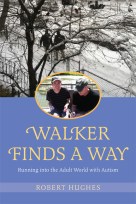
Minus the not “make a nickel” part (nickels, plenty of them, would be highly appreciated) this is how I feel about my book released today, Walker Finds a Way: Running into the Adult World with Autism.

The subject of the book—what happened when my low-functioning child with autism “aged out” of the educational system at 22—is one of critical concern to parents, families, and our political system. All parents of severely autistic children, no matter how much progress they see the child make as he ages, experience an ever-louder and more piercing tornado siren of anxiety the closer the child gets to age 22.

What will happen? Where will he live? How will he live when we are gone? The political and social problem is also dire: what will society do to help a growing population of people who can’t help themselves?

I wrote this book to tell the hard truth about young people like my now 30-year-old son. I think in speaking for him I speak for many thousands of other young adults who have no voice, no ability to speak for themselves. There are many Breakthrough Books that tell wonderful stories about curing autism. But that kind of story arc is not what the troops experience on the ground: no critical breakthrough occurs, the child does not show signs of living independently, parental worry about the future goes through the roof.

In Walker Finds a Way I tell how Walker’s life in a group home was very good until it became less and less good and finally very bad. In navigating this disaster, in extricating him from a damaging group home and vocational program, we realized new things about our son: his hidden resilience, his sophisticated understanding of his plight, his determination to affect his own fate.

As his mother Ellen and I struggled to help Walker, we began to see the resourceful ways in which he was helping himself.  Lesson for his dim parents: Never, never underestimate him.

Another reason I wrote this book is because I know Walker’s story and ours is very much like that of other young adults with autism and their families. As I say in the book, “I’ve written this because nobody would pay attention to me if I stood with a megaphone at the corner of State and Randolph streets in Chicago, shouting, ‘My son and others like him are worthwhile people! Get to know them! Make friends with them! Your life will be enriched! And pass laws that will help them lead satisfying lives!’ Come to think of it, maybe people would pay attention in ways that would surprise me. It could be worth a try, actually.”

For now, I’ll stick to this book and this website, but I still won’t rule out the street theater. It’s too damn important.
walkerfindsaway


DNAinfo Chicago Article: State Becoming like ‘Ancient Sparta’

Thanks to DNAinfo Chicago reporter Ariel Cheung for this excellent article using Walker’s story in Walker Finds A Way to illustrate the effects of dire service cuts in Illinois.


State Becoming like ‘Ancient Sparta’ with Cuts to Autism Services: Author

Ariel
By Ariel Cheung | January 28, 2016
@arielfab

LAKEVIEW — Robert and Ellen Hughes didn’t watch Tuesday’s State of the State address.

As far as they were concerned, they’d seen enough to realize the state wasn’t functioning they way they needed it to. Worse, Robert Hughes said, “there’s no end in sight.”

WalkerRobertBusStopa

Walker Hughes (l.) is the subject of his father’s second book, “Walker Finds A Way,” in which the Hughes family navigates the world of adult autism.

In fact, just two days earlier, the Hugheses learned the state’s largest social service provider, Lutheran Social Services of Illinois, was cutting 30 programs, unable to operate them with $6 million owed by the state that was seven months overdue.

Home care for seniors, adult protective services and a day care for adults with disabilities were among the suspended services.

It’s a situation the Hugheses understand all too well.

At the heart of Robert Hughes’ new memoir, “Walker Finds A Way,” is his son Walker’s transition into adulthood as a person with low-functioning autism in Chicago. After aging out of the school system at 22, Walker tests out independent life in a group home at the start of the book.

The smiling young man who adores country singer Clint Black, “popcorn parties” and long walks through Lincoln Park seems eager for a chance at independence, which his parents also grow to enjoy after a brief period of empty nest syndrome.

But as six years go by, Hughes writes that the quality of care at the home declined in an alarming way, leaving Walker desperate to express his distress with limited verbal abilities.

Hughes, who lives in Lakeview, describes a subtle shift in the North Side group home he blames on the state’s financial disarray — an added pressure for the home to take on too difficult of a workload.

“Behind this group home that went bad was the fact they were financially strapped,” Hughes told DNAinfo Chicago. “They were making up rationalizations about Walker because they didn’t have the staff to deal with the situation they had taken on.”

RWZOO12

Hughes and his his Walker took daily walks for years, traveling from their Lakeview home to North and Clybourn, visiting Lincoln Park and making stops at Starbucks or Walgreen’s.

While Walker was unable to verbally tell his parents what was wrong, his physical decline spoke volumes, they said. In two months, he lost 65 pounds. He started coming home with bruises, and his parents were alarmed.

Yet they felt trapped, fearing that pulling Walker from the home would cost him state funding for the service or leave them trapped on wait lists for years.

As they grappled with limited options, Gov. Bruce Rauner announced in April 2015 — World Autism Month — that he was freezing $1 million of state support for people with autism, many of them children.

“Illinois isn’t ancient Sparta, where disabled infants were left to die of exposure on hillsides,” Hughes wrote in the memoir. “But some voters here seem to envy the practice.”

After writing “Running With Walker” in 2003, Hughes felt “his saga was over, as far as strangers reading a book about him were concerned.” In the first memoir, Walker starts off as a “severely active” 2-year-old in the 1980s. At the time, autism was believed to affect one in 10,000 births (now, it’s more like one in 45 children ages 3-17) and little was understood about the spectrum of abilities children with autism could display.

Walker - age 4

Walker Hughes, seen here as a child, is now 30 and continuing to forge his own path as an adult with autism.

As the first generational class of growing autism awareness reach adulthood, their changing needs are being considered at a national level. Earlier this month, presidential candidate Hillary Clinton announced a plan to improve safety, education, employment and housing for people with autism. Former Florida Gov. Jeb Bush and Ohio Gov. John Kasich have also addressed the topic.

As the Hughes family sought a solution to their turmoil, “I thought this is a story that should be told,” Hughes said. “People should know about this.”

“Walker Finds A Way” was released Jan. 21 and is available on Amazon.

Link to DNAinfo Chicago article